
AI can run the admin. It cannot make the finding.
Workplace investigations are slow, document-heavy and high-stakes, which is exactly the profile of work people now hope AI will absorb. The pull is real. An investigation into a grievance or a misconduct allegation can swallow weeks: planning against policy, scheduling and recording interviews, reading hundreds of emails and messages, building a chronology, and drafting a report that has to withstand scrutiny if the matter ever reaches the Fair Work Commission. Generative AI is genuinely good at several of those tasks. It is also dangerous in exactly the places where an investigation can go wrong, because the parts AI does worst are the parts that decide a person's job.
The question for HR is not whether to use AI in investigations. People are already pasting interview notes into ChatGPT. The question is where the line sits between work AI can safely carry and work that must stay with a human investigator, and how to hold that line under the pressure of a live matter.
What AI is actually good at here
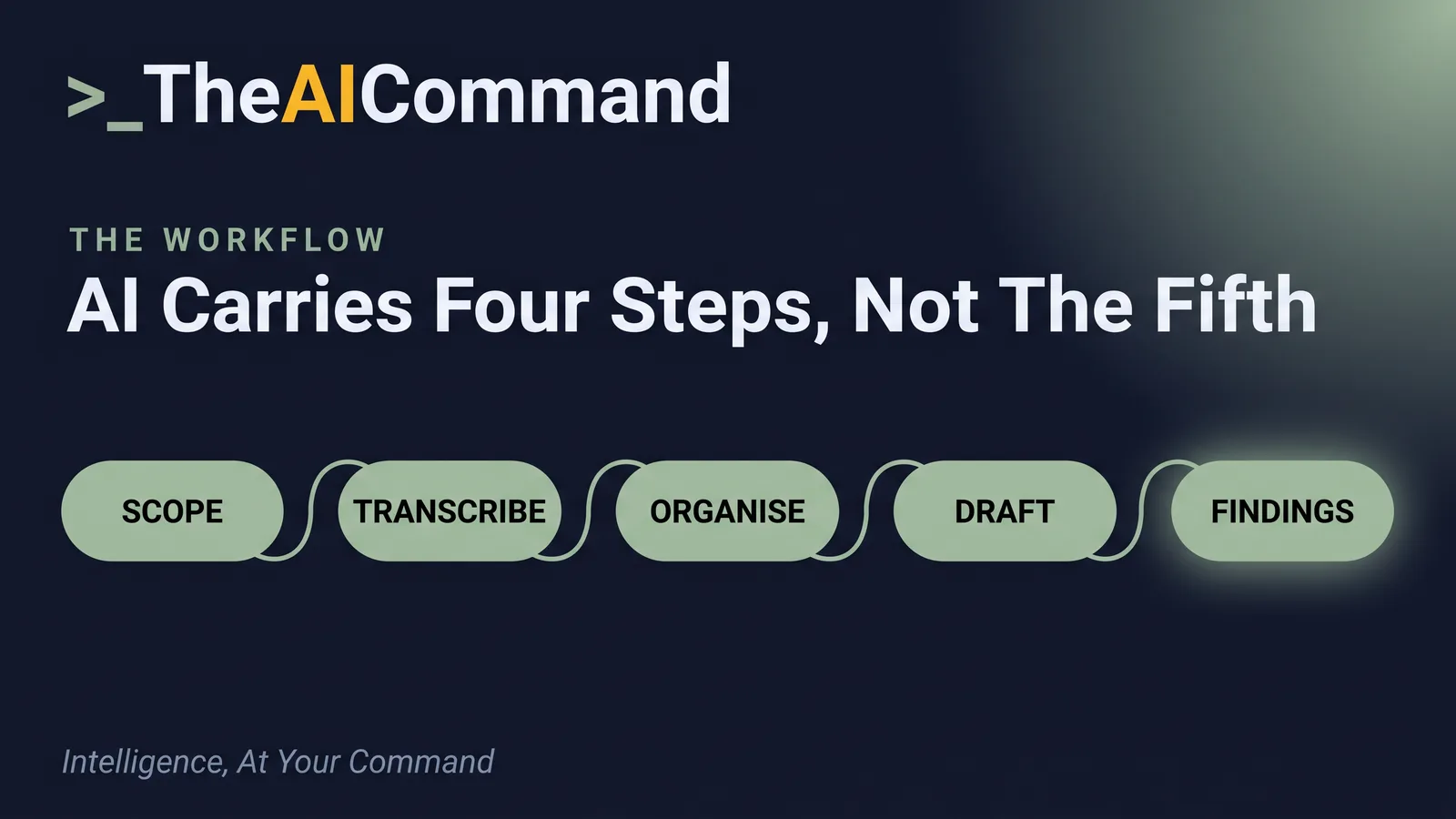
Guidance from employment lawyers is converging on a useful split. In a detailed note on AI in Australian public sector investigations, the firm Lander and Rogers identifies four practical uses: investigation planning, records of interview, evidence organisation and document drafting. Each maps cleanly onto a real bottleneck.
Planning is the first. An investigator has to design a process that complies with the organisation's policy, the relevant enterprise agreement and the principles of procedural fairness. AI is well suited to reviewing the applicable policy and drafting a detailed investigation plan, including the allegations to be put, the witnesses to interview and the sequence of steps, which a human then checks and owns.
Records of interview are the second, with a hard condition. AI transcription tools turn a recorded interview into an accurate written record in minutes rather than hours. Lander and Rogers is explicit that investigators "must ensure that appropriate notification or consent has been provided by the witness before recording and transcribing an interview", and must "always independently check the accuracy of the output before relying on it". A mis-transcribed answer in a record of interview is not a typo. It is a factual error in evidence.
Evidence organisation is the third and often the most valuable. A model can filter, sort and arrange large volumes of documents chronologically, and surface patterns across a body of messages that a human reading sequentially would miss. For an investigation with thousands of records, this is the difference between a week of reading and a focused day.
Document drafting is the fourth. AI can produce first drafts of the procedural correspondence an investigation generates: the letters notifying a person of allegations, the questions for an interview, the structure of the final report. The draft saves time. The judgement in it remains the investigator's.
The other side of the desk
There is a second reason HR needs a clear view on AI in investigations, and it has nothing to do with how HR uses the tools. The complaints arriving on the desk are increasingly AI-drafted too. The Fair Work Commission has seen a sharp rise in applications prepared with generative AI, and a meaningful share of them contain invented case citations, misstated law or facts that do not match the person's actual circumstances, while still demanding a full and proper response. In March 2026 the Commission published draft guidance asking parties to disclose whether they used AI in preparing a matter and to confirm they had checked the output for accuracy.
For an investigator, this changes the posture. A complaint that reads fluently and cites authority is not, for that reason, well founded. The same property that makes AI useful, its ability to produce confident, polished prose, makes AI-assisted allegations easy to overrate. The discipline is the same on both sides of the desk: verify the substance, do not be moved by the tone. An investigation should test what the evidence supports, whether the underlying complaint was written by a person, a lawyer or a chatbot.
The practitioner play
Here is a defensible way to run an AI-assisted investigation. Treat it as a pattern, not a script, and adjust it to your policy and to the matter.
1. Scope with the policy, not the allegation. Before any AI touches the file, define the allegations precisely and identify the policy, agreement and legal framework that govern the process. Then use AI to pressure-test your plan: ask it to review the policy text and your draft investigation plan for steps you have missed or fairness obligations you have not addressed. You are using the model to improve your process design, not to design it for you.
2. Gather and transcribe under approved tools only. Record interviews only with notification or consent. Transcribe using a tool your organisation has approved for sensitive data, never a public consumer model. Then read the transcript against your memory of the interview and correct it. The transcript is evidence, and you are certifying it.
3. Organise the evidence with a de-identified or contained dataset. Use AI to build a chronology and cluster the documents, working within an approved, contained environment. Where the matter is sensitive, consider whether names need to be in the prompt at all. A chronology for "[EMPLOYEENAME], a member of [TEAM]" is just as useful to you and far safer if it ever leaks. Ask the model to flag gaps and inconsistencies for your attention. It is surfacing things to check, not reaching conclusions.
4. Draft the framework, then write the analysis yourself. Let AI draft the procedural scaffolding of the report: the background, the allegations, the process followed, the structure. Stop there. The analysis section, where evidence is weighed and findings are reasoned, is yours to write. If you cannot explain in your own words why you preferred one account over another, you do not yet have a finding.
5. Make the finding as a human, and record that you did. The conclusion on each allegation, and the assessment of credibility behind it, is a human judgement. Record that the findings were made by the investigator, on the evidence, applying the civil standard. This is not box-ticking. If the matter is challenged, the question will be whether a person exercised judgement or whether a machine produced an outcome.
Take a worked example. [EMPLOYEENAME], a member of [TEAM], is the subject of a bullying complaint involving a long thread of chat messages and several witnesses. An AI-assisted process looks like this. The investigator drafts the allegations and, with the model, checks the plan against the organisation's complaints policy. Interviews are recorded with consent and transcribed in an approved tool, then corrected by the investigator. The full message thread is loaded into a contained environment, and the model builds a dated chronology and flags the exchanges where accounts diverge. The investigator reads those exchanges in full, forms a view on which account is more reliable and why, and writes the analysis. The model drafts the report's background and process sections. The findings, on each allegation, are the investigator's, recorded as such. At no point did the model decide whether the conduct occurred. It cleared the path so the investigator could.
The governance line
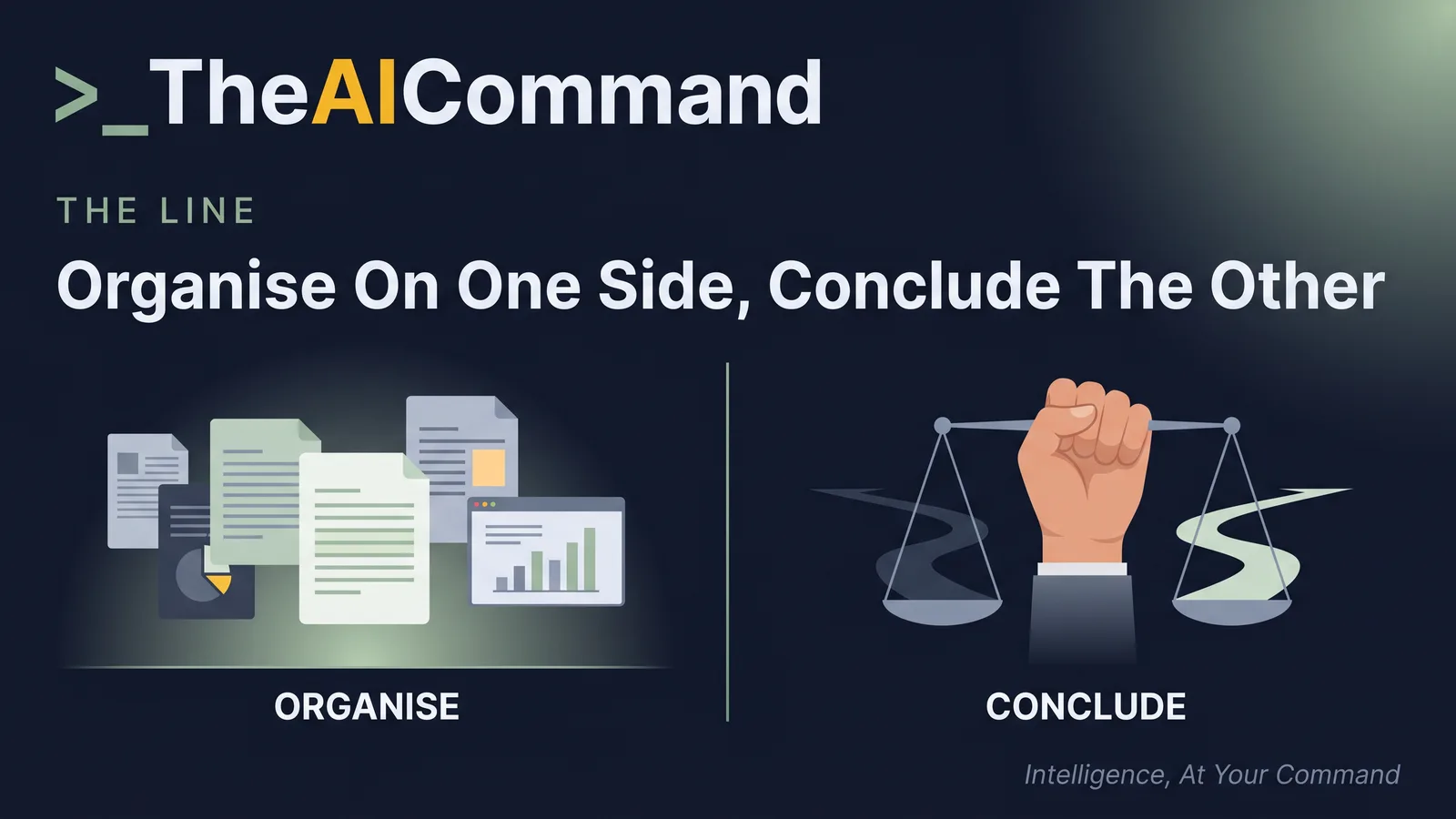
Three Australian frameworks shape where the boundary has to sit, and HR should be able to name all three.
The first is procedural fairness. A workplace investigation has to give the person a genuine opportunity to respond to the allegations and has to be conducted without bias. An AI model that drafts a "likely finding" before the person has been interviewed has quietly prejudged the matter, and a process that prejudges is a process that fails. Lander and Rogers puts the principle bluntly: "Assessing credibility, weighing up the evidence, making findings and ensuring procedural fairness are the responsibilities of the investigator, not AI tools." Procedural fairness is also why an investigator cannot lean on a model's confident tone. Large language models produce fluent, certain-sounding text whether or not the underlying reasoning is sound, and a confidently worded AI summary of a witness account is not a substitute for the investigator's own assessment of that witness.
The second is the law of unfair dismissal. Where an investigation underpins a decision to discipline or dismiss, the factors a tribunal weighs include whether there was a valid reason and whether the person was notified and given a fair opportunity to respond, the criteria set out in section 387 of the Fair Work Act 2009. A flawed investigation undermines both the reason and the process. AI that introduces an error into the evidence, or a prejudgement into the analysis, attacks the foundation the eventual decision rests on.
The third is privacy and confidentiality. Investigation material is among the most sensitive information an organisation holds: allegations, health information, accounts of conduct that may never be substantiated. Lander and Rogers warns that "classified, confidential or sensitive information should never be disclosed to open-source AI tools, nor any AI tool that is not approved for use". The practical rule is simple. If you would not email the document to a stranger, do not paste it into a consumer model. Use only tools your organisation has assessed and approved, with data handling you can stand behind.
There is a fourth consideration that HR feels more than lawyers do. The investigation itself is a psychosocial event for everyone caught in it. Speeding up the mechanics with AI can be a genuine welfare improvement, because a faster, better-organised process means less time in limbo for the complainant, the respondent and the witnesses. That is a legitimate reason to use these tools well. It is not a reason to let them shortcut the judgement that makes the process fair.
What never to automate
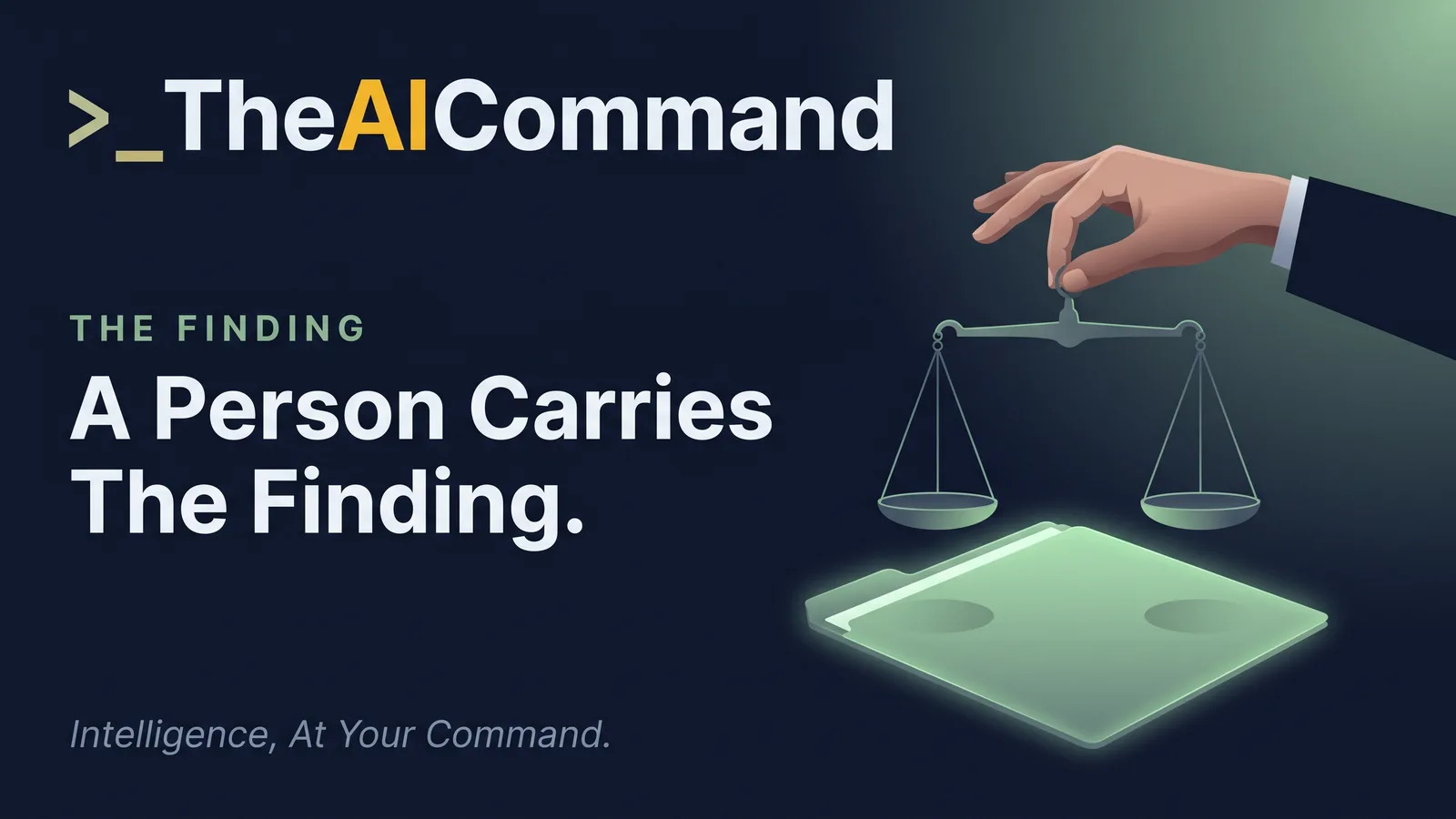
Some lines do not bend. Do not let AI assess credibility. Judging whether a witness is reliable depends on context, demeanour and the weight of competing accounts, and it is the core of an investigator's craft. Do not let AI make findings of fact or determine whether an allegation is substantiated. Do not let it decide an outcome or recommend a sanction. And do not let it draft the disciplinary rationale, because that rationale is the reason a person can be performance-managed or dismissed, and it has to be a human's reasoning, not a model's autocomplete.
The clean way to hold the line is to remember what the organisation is actually certifying when an investigation concludes. It is not that the documents were well organised or that the report reads cleanly. It is that a person looked at the evidence, gave the affected employee a fair hearing, and exercised judgement. AI can make every part of that faster except the judgement, and the judgement is the part that was ever the point. Use AI to clear the desk so the investigator can do the thinking. Never use it to do the thinking.
TheAICommand. Intelligence, At Your Command.