
Your AML program documents quietly changed on 19 June.
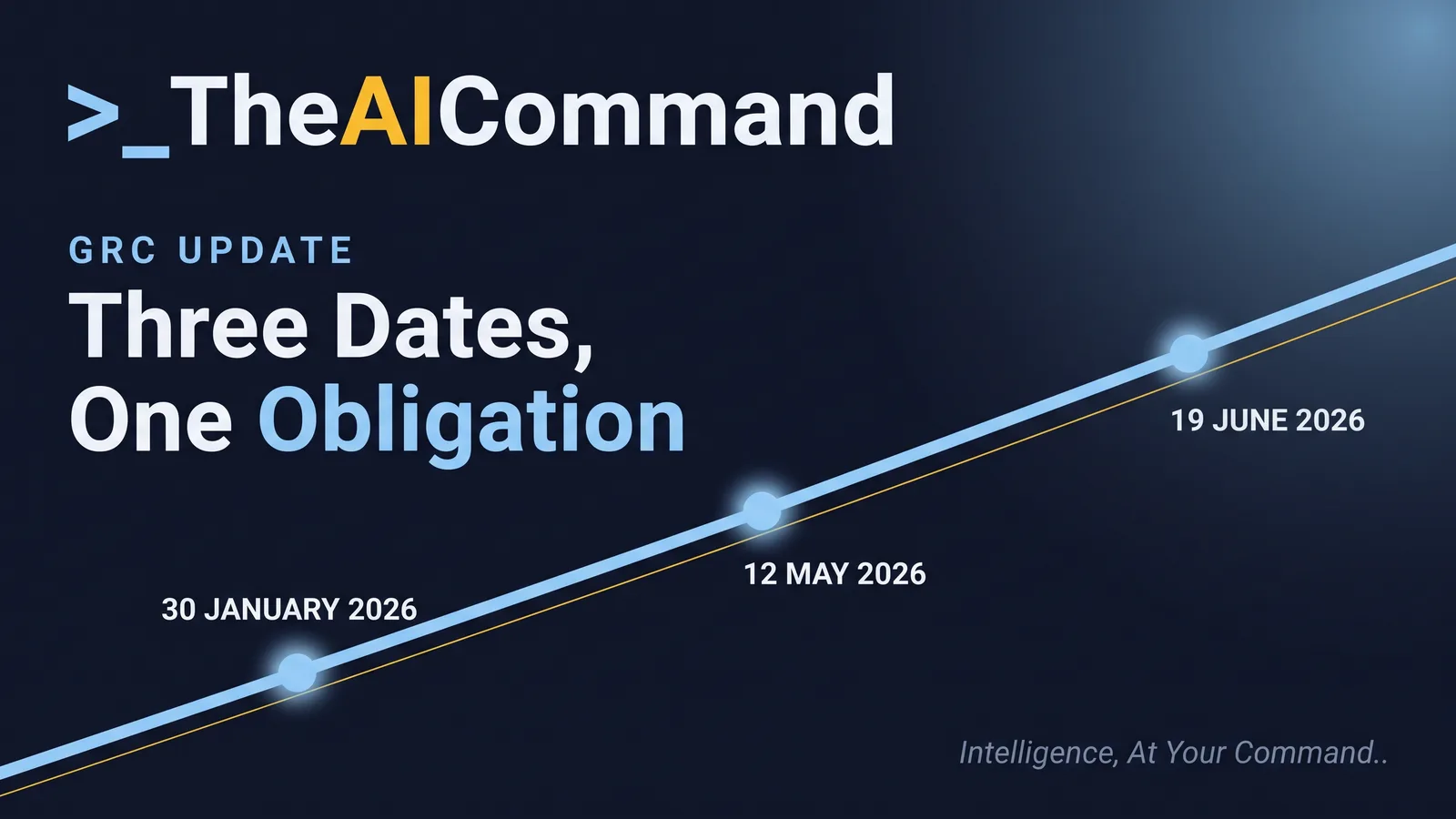
On that date AUSTRAC updated the program starter kit documents that reporting entities use to build their AML/CTF programs: the initial customer due diligence forms, the process document, the risk assessment and the policy document. AUSTRAC was explicit about one of the reasons. The risk assessment now carries, in its words, "updated risk information to reflect our 2026 national risk assessment updates, including new information on artificial intelligence, decentralised finance (DeFi) and offshore virtual asset service providers." If you built your program from a starter kit before that update, AUSTRAC's instruction is direct: "review the changes and updated documents for your industry and update your program where required."
For most firms this will not arrive as a dramatic letter. It is a change-log entry. That is precisely why it is worth attention. AI risk has moved from the horizon-scan slide into the document the regulator expects you to maintain.
What actually changed
The starter kits sit on top of AUSTRAC's national risk assessments, and those were refreshed first. On 12 May 2026 AUSTRAC released three new national updates and said plainly where the pressure is coming from. AUSTRAC CEO Brendan Thomas put it this way: "Criminals are increasingly using AI as a part of their money laundering toolkit, fabricating identities, forging documents and rapidly disguising the proceeds of scams. In some cases, technology is automating what used to be manual laundering techniques, raising the sophistication and scale of financial crime." The agency framed it as a structural shift, not a one-off: "digitisation and emerging technologies, particularly artificial intelligence and virtual assets, are increasingly acting as enabling capabilities for serious financial crime."
The 19 June starter kit update is the operational consequence of that risk picture. It is not a redesign. AUSTRAC described the changes as "targeted" rather than a rebuild, and they sit alongside other adjustments flowing from the AML/CTF reform timetable: the transitional rules, the amended AML/CTF Rules, and the broader Tranche 2 expansion. The risk-assessment changes are the ones that matter for this discussion. Beyond adding the AI, DeFi and offshore virtual-asset content, AUSTRAC also strengthened risk-assessment practice to "clarify that indicators of unusual or criminal behaviour apply during initial customer onboarding," which is exactly the moment a synthetic or AI-assisted identity is most likely to slip through.
Who has to act, and on what
The honest reading is that two audiences are affected differently, and both have something to do.
For established financial-services firms, the starter kits are not your tool. You run a mature program and a periodic enterprise-wide risk assessment. The change is upstream of you: the national risk assessment AUSTRAC expects you to take into account has been refreshed to name AI as an enabling capability. That is a prompt to revisit how your own risk assessment treats AI-enabled fraud and laundering, and whether your transaction-monitoring scenarios and your suspicious-matter indicators reflect a world where a convincing forged document or a fabricated identity costs a criminal almost nothing to produce.
Concretely, that means looking at three things you already maintain. Your enterprise risk assessment should now have a line that explicitly considers AI-enabled identity and document fraud against your customer base, rather than treating fabrication as a fixed, low-probability event. Your onboarding controls should be tested against the assumption that a presented document or selfie may be synthetic. And your monitoring scenarios should be reviewed for whether they would catch high-volume, machine-paced structuring as readily as the slower patterns they were originally tuned to find. If the answer to any of those is "we have not looked since the risk picture changed," that is the work the refreshed national assessment is pointing at.
For the tens of thousands of newly regulated businesses standing up programs for the first time, the starter kit is the program. If you generated a risk assessment from a kit downloaded before 19 June, you are now working from a superseded document. That is not a paperwork inconvenience. The risk assessment is the load-bearing artefact of the whole regime: the due diligence settings, the monitoring rules and the reporting thresholds all flow from it. A risk assessment that does not reflect the regulator's current view of AI-enabled crime is a weaker defence, and a less defensible one if AUSTRAC ever asks how you reached it.
The threat side: what belongs in the risk assessment now
The practical question is what AI changes about the risk you are assessing. Three shifts are worth writing down.
The first is identity. The cost of a convincing fake has collapsed. Fabricated identity documents, synthetic identities assembled from real and invented details, and AI-generated images that pass a casual liveness check are all cheaper and more plausible than they were two years ago. The control implication lands at onboarding, which is exactly where AUSTRAC has just sharpened its expectation. If your customer due diligence assumes a forged document is rare and obvious, that assumption is now out of date.
The second is scale. AUSTRAC's point about "automating what used to be manual laundering techniques" is the one most likely to be underweighted. AI does not just make individual fakes better. It lets a criminal run many low-value, structured transactions, or open many accounts, with far less human effort. A monitoring rulebook tuned for a slower, more manual adversary will miss patterns that only appear at machine speed and volume.
The third is the content of communications. The plausible email, the polished business narrative, the well-structured supporting story that used to take effort and often gave a launderer away through sloppiness can now be generated cleanly. The tell that an analyst once relied on, the document that did not quite read right, is less reliable.
It helps to see how this reads on the page. A weak risk-assessment line says the business faces a low risk of document fraud because staff are trained to spot forgeries. A current line says the business faces an elevated and rising risk of synthetic identity and forged-document fraud at onboarding, given that AI has reduced the cost and increased the quality of fakes, and sets out the additional verification steps applied to higher-risk customer types as a result. The same logic flows into the suspicious-matter indicators: an indicator that once read "customer presents an altered or suspicious document" is sharper when it also captures identity details that are internally consistent but cannot be corroborated against an independent source, which is the signature of a well-built synthetic identity.
None of this requires a firm to become a technology expert. It requires the risk assessment to say, in plain terms, that these typologies exist and that the firm has considered how its services could be misused given them. That is the difference between a living risk assessment and a template that could have been written for anyone.
The defence side: govern your AI the way the regulator governs its
Here is the part most firms miss. AUSTRAC is not only warning about AI in the hands of criminals. It is using AI itself, and it has published how. The transparency statement is worth reading as a model, because the regulator is effectively demonstrating the controls it understands.
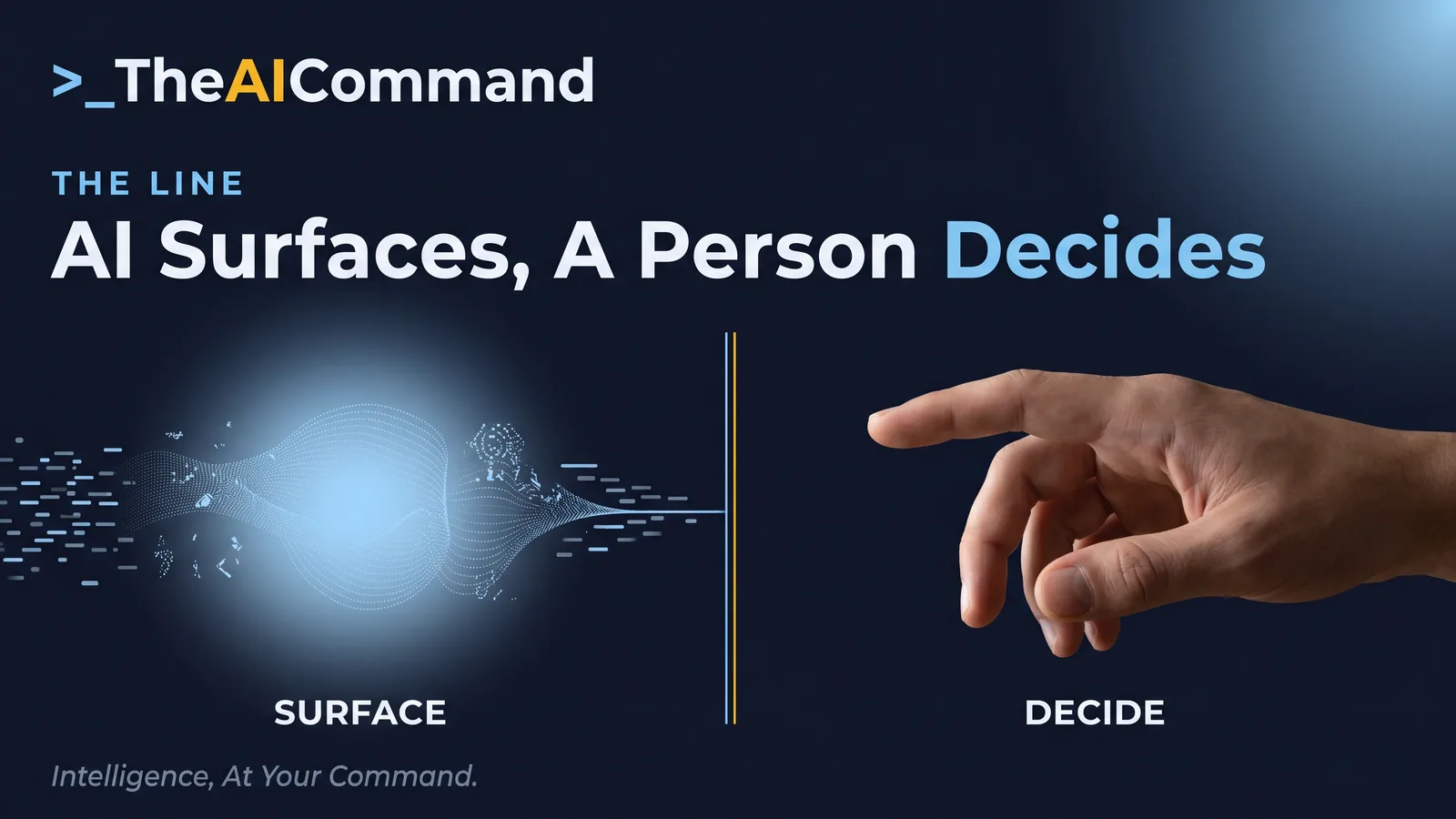
AUSTRAC states that it "utilises AI-enabled analytics to help detect indicators of financial crime and support analysts to generate insights." Crucially, it pairs that with a firm boundary: its approach is "to leverage new techniques which advance outcomes while ensuring humans remain a key part of the decision-making process," and it confirms it "has not yet deployed AI which directly interacts with the public or is involved in decision making and administrative action without human intervention." On data, it "applies mandatory protective security controls to ensure that no sensitive or classified information is entered into public generative AI systems." It even names an accountable official for AI.
Read that as a checklist for your own deployment. If you put AI into transaction monitoring or customer screening, the regulator's own practice tells you what good looks like: AI surfaces and prioritises, a person forms the suspicion and makes the report; sensitive data does not go into a public generative tool; and someone is named as accountable for the AI, not just the outcome. A firm that mirrors that discipline can explain its AI to a supervisor. A firm that lets a model auto-file or suppress suspicious-matter reports has handed a legal judgement to software, and AUSTRAC has just shown, in its own statement, that it does not do that.
Practical implications
For a compliance function reading this as a task list, five things follow.
First, check the version. Confirm which iteration of the program starter kit your risk assessment and policy documents were built from, and whether it predates 19 June 2026. If it does, schedule the review AUSTRAC has asked for.
Second, update the risk assessment for the AI typologies above: identity fabrication, automation and scale, and synthetic communications. Write how each could touch your services, customers, channels and geographies. Keep it specific to the business.
Third, revisit onboarding. AUSTRAC has clarified that unusual-behaviour indicators apply at initial onboarding. Make sure your customer due diligence is calibrated for AI-assisted document and identity fraud at that first contact, not only later in the relationship.
Fourth, if you use AI in monitoring or screening, document it against AUSTRAC's own model: human in the decision, protective-security controls on data, a named accountable owner, and a record of why the tool is calibrated the way it is.
Fifth, keep the reasoning. The risk assessment, the AI deployment rationale and the version history together are what a defensible position looks like when a supervisor asks how the firm decided.
The discipline this rewards
There is a deeper point under the change-log entry. A defensible AML/CTF program is a documented chain of reasoning: here is how our business could be misused, here is how risky we judge each part of it, here is what we do about it, and here is why those controls are set the way they are. AI risk slots into that chain rather than sitting beside it. So does the AI you deploy to defend against it.
The firms that handle this well will not treat the 19 June update as a box to re-tick. They will treat it as a prompt to ask whether their understanding of their own exposure is current, and to govern any AI they use with the same human-in-the-loop discipline the regulator applies to itself. The ones that struggle will regenerate a document, change the date and move on, and will discover the gap the first time a synthetic identity or an automated structuring pattern walks through a control that was tuned for a slower world.
AUSTRAC has told the market, in the most ordinary way it can, that AI is now part of the financial-crime risk every reporting entity must understand. The instruction is not to fear the technology. It is to keep the risk assessment honest, and to hold the line on human judgement, on both sides of the machine.
Content disclaimer: This article is for general educational and informational purposes only. It does not constitute legal advice, regulatory guidance, or a substitute for professional compliance judgement. Regulatory obligations vary by entity type, licence, and circumstance. Always refer to primary source guidance from AUSTRAC, the OAIC, or the relevant regulatory authority.
TheAICommand. Intelligence, At Your Command.